Get In Touch
Debate to Direction - What Birmingham Revealed About the Future of Project Controls
Chirag Shah • April 23, 2026
From Debate to Direction - What Birmingham Revealed About the Future of Project Controls
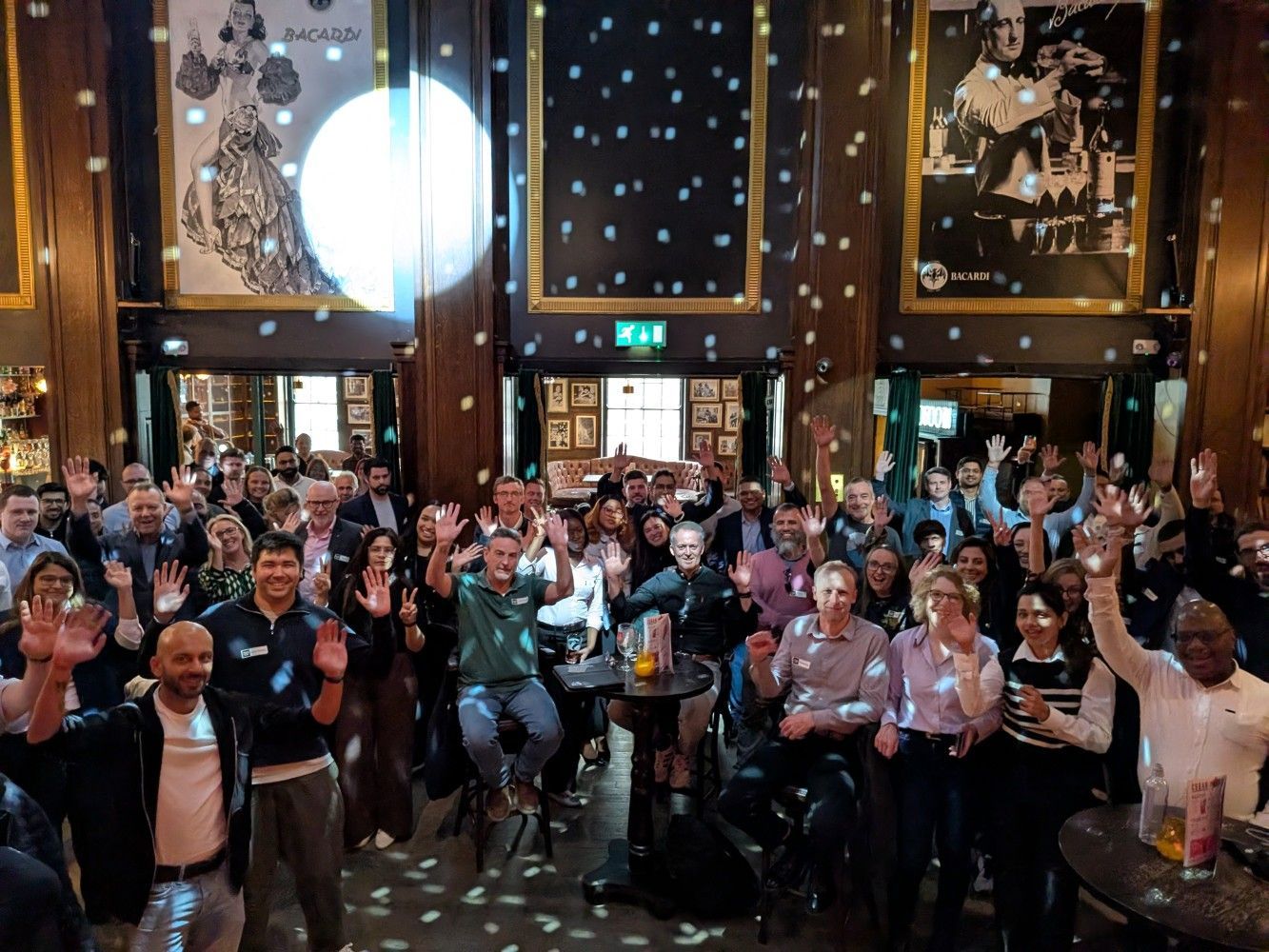
Last week in Birmingham, something simple - yet powerful - took place.
No overcomplicated formats. No drawn-out presentations. Just a room full of experienced professionals from across project controls, digital, and AI, brought together to do one thing:
Debate.
And in that simplicity came clarity.
What emerged from the discussions was not just opinion, but a reflection of where the industry truly stands today - its challenges, its opportunities, and, importantly, what needs to happen next.
Culture vs Structure - Why People Still Make the Difference
The first debate tackled a familiar tension within organisations: culture versus structure.
On one side sat the argument for systems, governance frameworks, and standardisation. On the other - a focus on human behaviour, collaboration, and organisational mindset.
The conclusion from the room was decisive. Culture won.
This was not a dismissal of systems or process. Rather, it was an acknowledgement that even the most sophisticated tools will fail without the right environment to support them.
Poor data sharing, fragmented governance, and inconsistent delivery are often labelled as technical challenges. But as highlighted in the debate, they are more often human ones.
Silos still exist. Resistance to change is real. And in many organisations, fear - whether of transparency, accountability, or disruption - continues to hold progress back.
For employers, this presents a clear takeaway. Investment in tools and systems must be matched by investment in people, communication, and leadership.
For professionals, it reinforces the importance of soft skills. Technical capability will always matter, but the ability to influence, collaborate, and drive change is becoming just as critical.
AI in Project Controls - Tool, Not Replacement
The second debate addressed one of the most talked-about topics in the industry - artificial intelligence.
Is AI here to replace project controls professionals, or is it simply another tool in the toolkit?
The consensus was clear. AI is not a replacement. It is an amplifier.
Automation will undoubtedly reshape how work is delivered. Repetitive tasks will become more efficient. Data processing will become faster and more accurate. Insights will become more accessible.
But accountability does not disappear.
Judgement does not disappear.
Decision-making does not disappear.
These remain firmly human responsibilities.
For organisations, this shifts the conversation. The focus should not be on reducing headcount, but on enabling teams to operate at a higher level.
For individuals, it highlights an opportunity rather than a threat. Those who embrace AI and learn how to use it effectively will position themselves ahead of the curve.
Those who ignore it risk being left behind.
AI and Delivery - Opportunity with Caution
The third debate built on this theme, exploring how AI impacts real-world project delivery.
Unlike the previous discussion, this one divided opinion.
Some argued that introducing AI into already complex delivery environments risks adding noise - more data, more tools, more potential for confusion.
Others took a different stance. Rejecting AI, they argued, is no different from rejecting electricity. The potential is too significant to ignore.
The audience landed somewhere in the middle.
Cautious optimism.
AI clearly has a role to play in improving delivery outcomes. But implementation matters. Without clear strategy, governance, and integration, even the most advanced solutions can create more problems than they solve.
This is a familiar story in project controls. Tools are often introduced with high expectations, only to underdeliver due to poor adoption or unclear purpose.
The lesson here is not to slow down innovation, but to approach it with intent.
The Bigger Picture - Technology Isn’t the Blocker
Across all three debates, a consistent theme emerged.
Technology is not the primary challenge facing the industry.
People, process, and execution are.
This is an important distinction. It is easy to focus on the latest tools, platforms, and innovations. But without the right foundations, these advancements cannot deliver their full value.
For hiring managers, this reinforces the need to look beyond technical capability alone. Cultural fit, adaptability, and communication skills are increasingly important when building high-performing teams.
For candidates, it presents an opportunity to differentiate. Demonstrating an understanding of both the technical and human sides of project controls can set you apart in a competitive market.
From Conversation to Action - Why Manchester Matters
If Birmingham provided the conversation, Manchester represents the next step.
The upcoming Controls and Skills Authority Conference 2026 is set to bring the project controls community together once again - but this time with a focus on turning insight into action.
The agenda centres around three core pillars:
- You - skills, leadership, and personal development
- Your Work - cost, planning, estimating, and risk
- Your World - governance, standards, and the broader industry direction
These are not abstract themes. They reflect the real challenges and priorities facing organisations today.
From developing the next generation of talent to improving collaboration across teams, and from strengthening governance to navigating the evolving role of technology - the conference is designed to address the issues that matter most.
Events like this play an important role in shaping the industry. They create space for honest conversations, shared learning, and, importantly, alignment.
Because progress in project controls is rarely achieved in isolation.

Recognising the People Behind the Profession
Alongside the conference, the SUPersonic Awards Evening offers something equally valuable - recognition.
In an industry often focused on outputs, timelines, and performance metrics, taking the time to celebrate individuals can sometimes be overlooked.
Yet it is those individuals - planners, cost engineers, risk specialists, and leaders - who ultimately drive success.
Bringing together experienced professionals, emerging talent, and training providers, the awards serve as a reminder of the people behind the profession.
It is also an opportunity to strengthen connections across the community in a more informal setting.
And, in keeping with the spirit of the events, it balances professionalism with a sense of enjoyment - something that is not always prioritised in the day-to-day demands of project delivery.
Why This Matters Now
The project controls landscape is evolving.
Projects are becoming more complex. Expectations are increasing. The margin for error is narrowing.
At the same time, new technologies - particularly AI - are changing how work is approached and delivered.
In this context, the insights from Birmingham are particularly relevant.
- AI is here, but it is not the full answer
- Culture remains a defining factor in success or failure
- Delivery is becoming more challenging, not less
These are not new ideas. But hearing them reinforced through open debate highlights their continued importance.
The next step is action.

A Practical Takeaway for Employers and Professionals
For employers, the message is clear:
Focus on building environments where people can succeed. Invest in culture as much as capability. Approach technology with strategy, not urgency.
For professionals:
Stay curious. Develop both technical and interpersonal skills. Engage with industry conversations and be open to change.
Because ultimately, the future of project controls will not be shaped by tools alone.
It will be shaped by the people who use them.
Looking Ahead
As the industry moves from discussion to implementation, events like the Manchester conference provide an important platform.
They bring together different perspectives, challenge existing thinking, and help align the direction of travel.
For anyone working in project controls, digital, or project delivery, the message is straightforward.
This is not just another event.
It is part of a wider shift in how the industry operates - and an opportunity to be part of that change.