Get In Touch
Project Controls Market Report 2026: Pressure, Progression and Reward
Chirag Shah • April 14, 2026
Project Controls Market Report 2026: Pressure, Progression and Reward
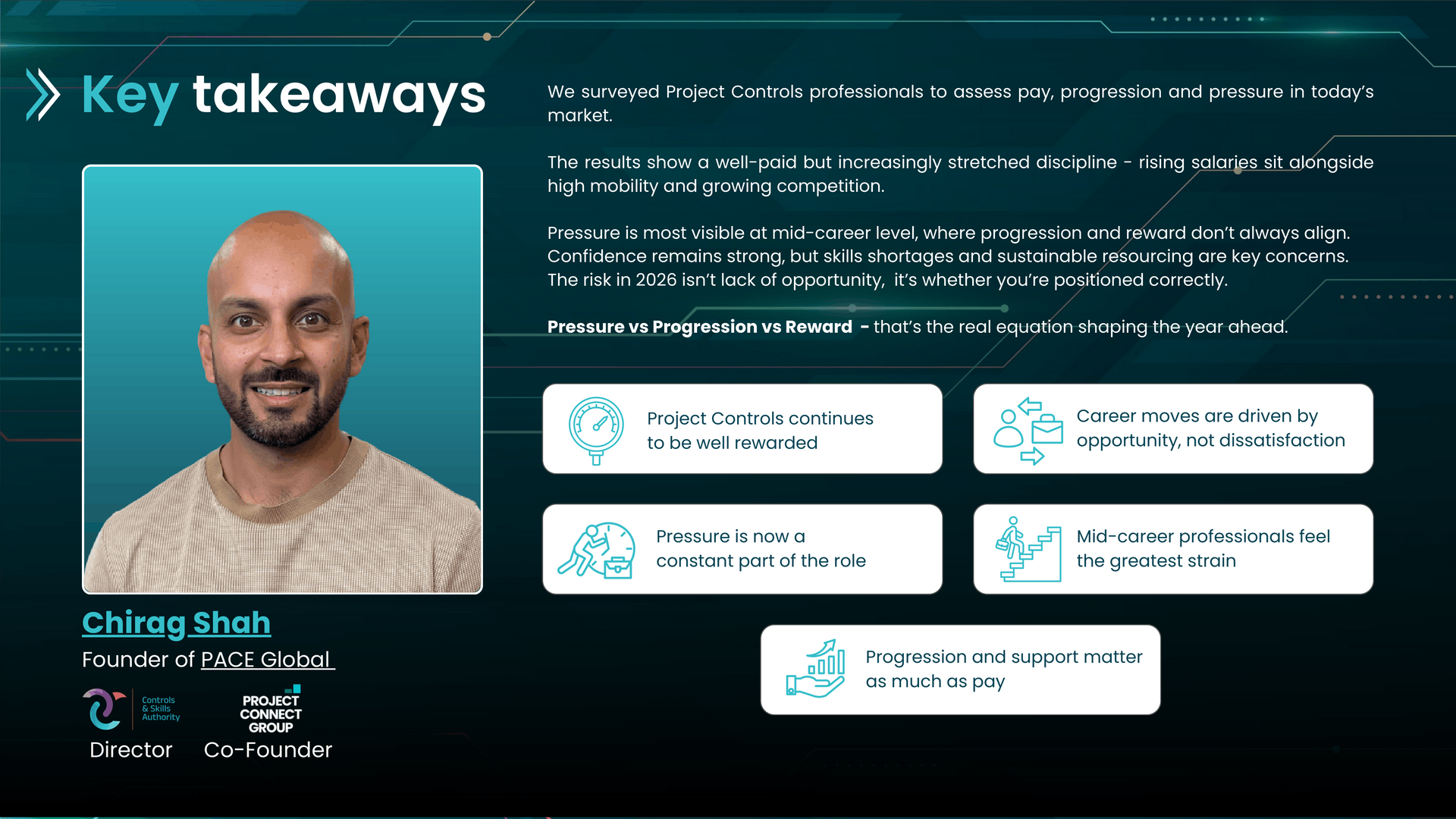
PACE’s 2026 Project Controls Market Report points to a market that is still attractive, still well paid, and still full of opportunity. But it also shows a profession under growing pressure. The three themes used in the report say it well: high pressure, high mobility, highly rewarding.
One of the clearest figures in the report is that 25% of professionals feel their salary has not kept pace with their responsibility and workload. That matters because the issue is not simply about pay levels. The report repeatedly shows that fairness, visibility and alignment now matter just as much as headline salary. Professionals are increasingly judging their situation based on whether reward matches accountability.
The market is still paying well. The report shows that the majority of permanent Project Controls professionals sit in the £50k to £90k band, while £90k+ salaries become far more common after 15 to 20 years of experience. It also notes that £100k+ roles do exist and are becoming more visible, but access is increasingly capability-led rather than simply based on tenure. In other words, experience still matters, but impact matters more.
For contractors, the picture remains strong too. The report highlights that the core contractor day-rate bands of £450 to £600 remain resilient, with premium rates still achievable where there is genuine specialist expertise. At the same time, it notes that for many contractors the bigger concern is no longer the rate itself, but the structure around it, especially the impact of inside IR35 regulations and umbrella models on net return and flexibility.
The most important theme in the report is arguably the pressure on the middle of the market. PACE identifies the 7 to 15 year experience bracket as the point where pressure and responsibility are often at their highest. Many professionals at this stage are carrying senior-level delivery weight without senior-level pay, title or progression clarity. That gap helps explain why mobility is so active. The report is clear that people are not usually moving because they are unhappy. They are moving towards better progression, stronger alignment and clearer recognition.
That is backed up by the report’s findings on what drives people to consider change. Salary and pay progression remains the biggest factor, with career progression and development close behind. Job location and remote flexibility also rank highly, reflecting the reality that hybrid working is now seen as an expectation rather than a perk. Culture and leadership are also becoming more influential in career decisions than they were in previous years.
Even with those tensions, confidence in the profession remains strong. The report states that 67% remain optimistic about the future of Project Controls, and that confidence is rooted in the discipline’s relevance rather than hype. The concern is not whether there is opportunity. The concern is whether organisations can respond well enough to skills shortages, capability gaps and sustainable resourcing challenges as projects become more complex.
For employers, the message is straightforward. The retention risk is no longer only about salary benchmarking. It is about whether progression pathways are clear and whether reward genuinely reflects responsibility. The report warns against confusing loyalty with inaction, noting that today’s market is quietly fluid. For professionals, the message is just as clear. Informed benchmarking matters, especially in a market where pressure is rising faster than progression clarity.
Final Thought
The 2026 Project Controls market is not short of opportunity. It is short of alignment. Strong salaries and day rates are still there, but they do not remove the pressure. The real challenge sits in the gap between what people are carrying and how they are being recognised for it. That is the equation shaping the market this year: pressure vs progression vs reward.